「Safeguard」計畫有助於消除污名,並提升大眾對心理健康的認知
The Safeguard program provides on-duty sessions with clinicians, reducing stigma, building awareness and helping members recognize stress early
On a typical shift, frontline members at York Regional Police move from one unknown to the next, from emergency calls and situations escalating in seconds, to moments that can linger long after the day ends.
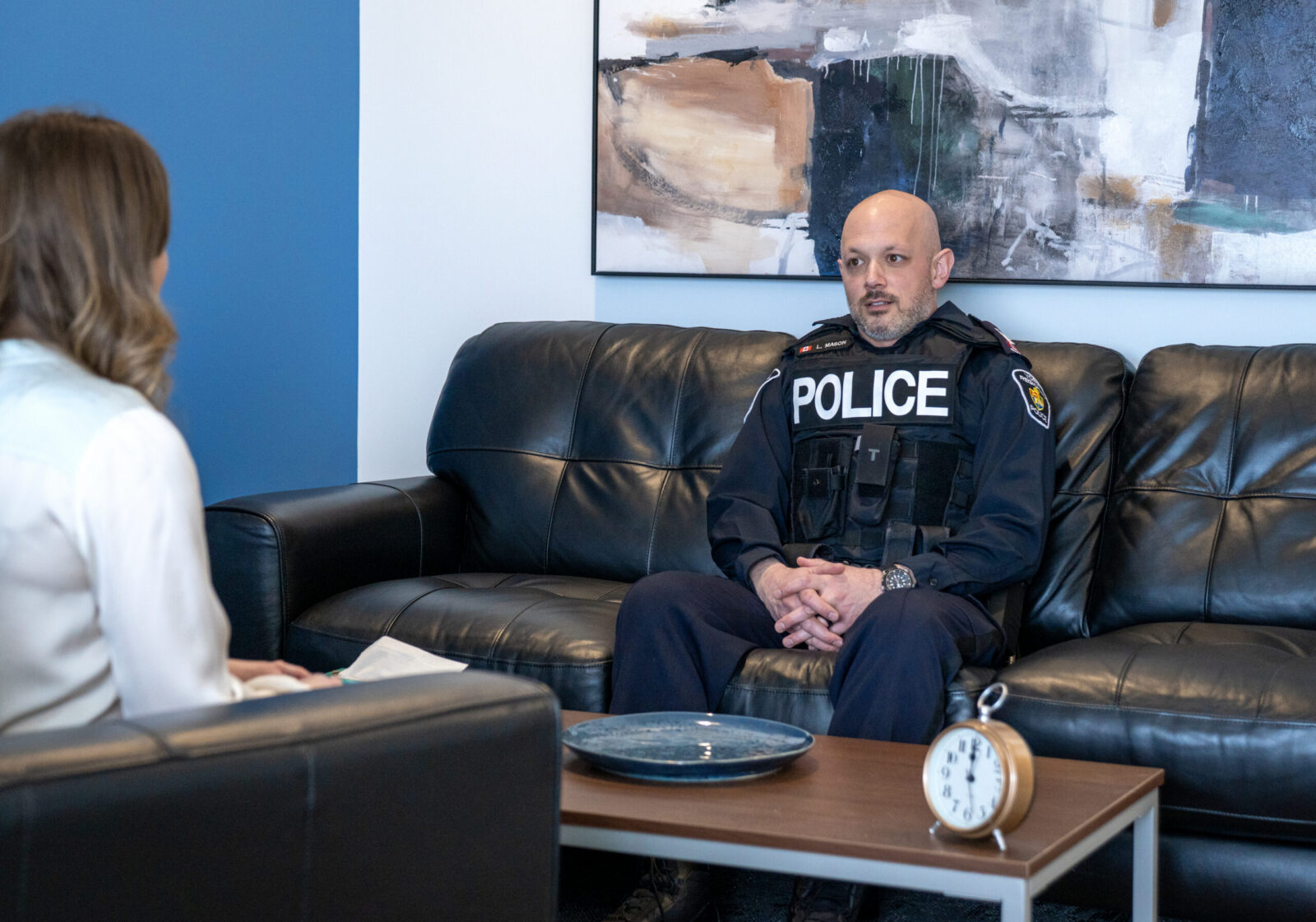
Within that unpredictability, the Safeguard program provides frontline and specialized members a dedicated hour, once a year, to sit down with a mental health clinician while still on duty.
“Safeguard is a mandatory program designed to enhance wellness and conversations about mental health,” said Dr. Dalit Weinberg, senior manager of the Psychological Health Unit. “It’s not an assessment or an evaluation of fitness for duty, but rather an opportunity to increase awareness of our resources and to reduce stigma.”
While attendance is required, participation is not. There are no checklists or prescribed disclosures—just a space shaped by whatever each member chooses to bring into it. Some speak openly about personal or professional stressors. Others simply listen, taking in information about coping strategies, warning signs, and available supports for themselves and their families.
The program mandates annual sessions for a wide spectrum of policing roles, from frontline officers and homicide investigators to 9-1-1 communicators, forensic specialists and undercover units. For members in the Internet Child Exploitation Unit, where exposure to traumatic material is especially frequent, those sessions take place quarterly.
Safeguard’s expansion has been gradual. Initially introduced within the Wellness Bureau, it grew alongside the Psychological Health Unit after its establishment in 2017.
The most significant shift came in 2025, when the program extended to uniform patrol — bringing it to members at the earliest stages of their careers.
That decision was shaped by feedback from investigators who had already participated in Safeguard. Many shared a common sentiment: They wished the program had been available sooner.
“When you’re on the road, the uncertainty is higher than it is in an investigative unit,” Weinberg said. “For that reason, it made sense to introduce Safeguard early in members’ careers, rather than waiting until they move into a specialized unit.”
In 2025, more than 1,200 members took part in Safeguard, including 735 frontline officers.
The objective of Safeguard is to help members recognize their own baseline, understand how stress can accumulate, and know when and how to seek support.
“Members who have participated in Safeguard report lower levels of stigma around mental health and a greater awareness of available resources compared to those who have not,” Weinberg said. “By sitting across from a clinician in a low-pressure setting, members begin to normalize the interactions.”
In a profession defined by urgency, Safeguard is built on the belief that protecting mental health starts long before something goes wrong, and sometimes the most important intervention is simply creating a safe space to have a conversation.