虚拟现实帮助警员以同情心和沉着冷静的态度应对处于危机中的人
Mental Health Crisis Response trains officers on virtual reality scenarios involving mental health and substance-use crises
Ensuring community safety and equitable service through continuous improvement remains a constant priority for York Regional Police. A new training program, Mental Health Crisis Response (MHCR), assists officers responding to individuals experiencing mental health and substance-use crises.
Mandated by Ontario’s Community Safety and Policing Act, this training uses virtual reality scenarios to teach de-escalation and relational communication. It was designed by Wilfrid Laurier University in collaboration with mental health clinicians, police, Indigenous cultural safety experts and people with lived experience of mental illness.
“The goal of MHCR is to enhance officers’ capacity for connection, communication and assessment, providing a more empathetic experience for members of the community,” Staff Sergeant Nicole Kearns of the Academics Unit said. “MHCR training gives police officers the skills to respond to people in crisis with greater calm, compassion and judgement.”
The training follows a multi-phase approach, with members completing an online module first, learning about the signs of mental health crises, the impacts on individuals suffering and ways to handle de-escalation.
The second module is an instructor-led group session that begins with a scenario video depicting a re-enactment of a police response to a person in crisis. Learners discuss how and why it goes the way it does, then formulate solutions for improved responses which are complimented by strategies provided by subject matter experts.
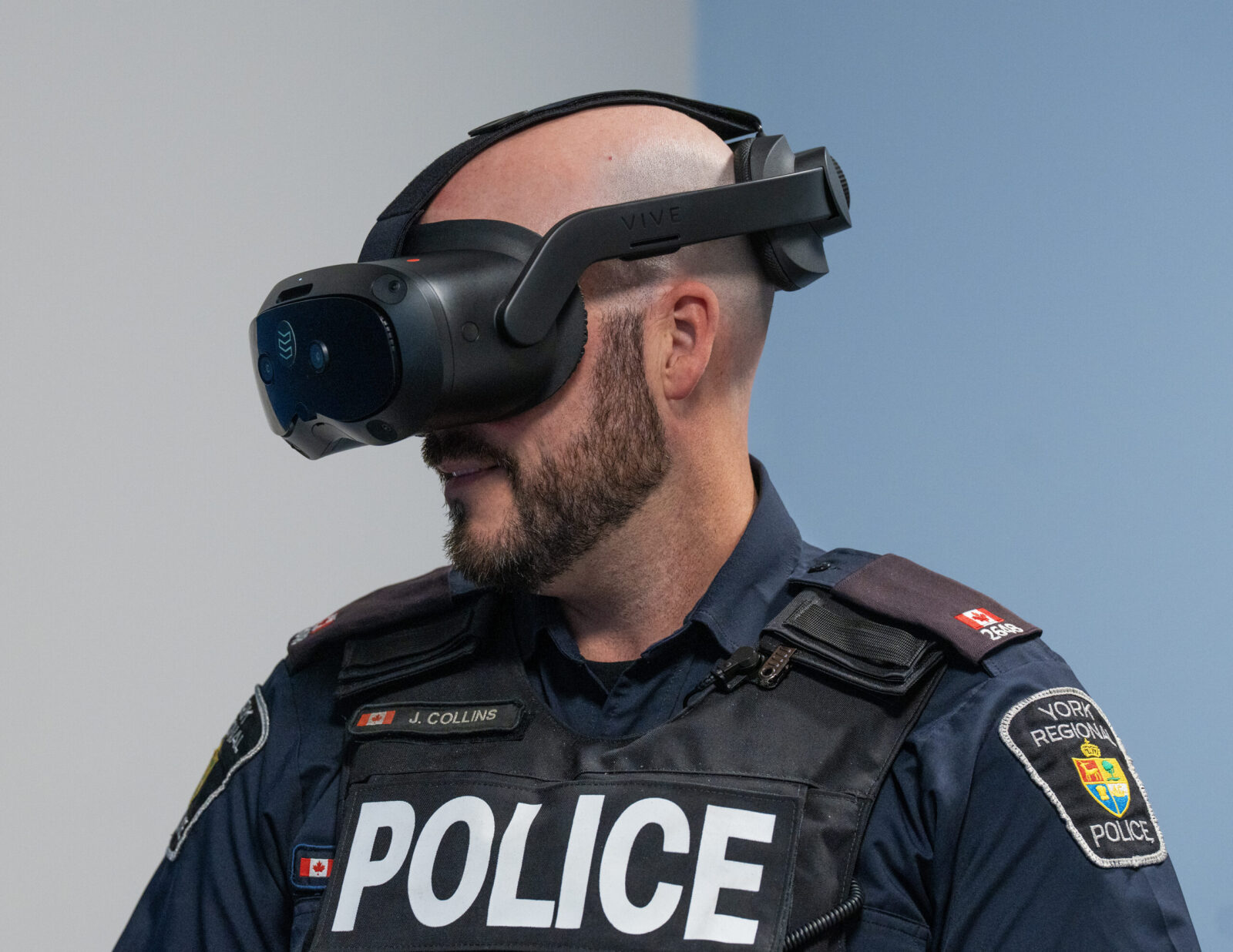
Lastly, members put on virtual reality goggles and enter a simulator, working through a scenario involving a member of the public in crisis. They are graded and provided feedback.
The training began in 2026, but planning for this new program began in spring 2025.
In April 2025, York Regional Police hosted a train the trainer course where professors from Wilfrid Laurier University attended and certified 30 of our members as instructors to be able to administer the MHCR training. Since the initial course, YRP has sent 10 more members to the instructor courses, with more planned for the near future to ensure that we have the adequate resources to deliver this training.
What followed was a substantial amount of research and development with the firm that developed the virtual reality simulator to ensure it worked within our own training structure.
Virtual reality equipment was delivered and set up at our Training and Education Bureau in March 2026 and the first classes began in April 2026.
Almost 700 members have completed all components of the training so far, and Training and Education is working to have all sworn members trained on MHCR by the end of the year.
“Response to the training has been positive from our members,” Staff Sergeant Ricky Ho of the Practical Skills Unit said. “They find it very engaging, because they actually immerse themselves in the scenario.”
MHCR training was running as a standalone course, but, as of June 1, 2026, the program has also been integrated into Practical Skills Requalification. It is now an annual fixture of police officers’ training as they advance through their careers, allowing frontline members to continuously improve their de-escalation skills and strive for empathy-centred outcomes on the road.